BHOODAN POCHAMPALLY
A resist-dyed saree from Bhoodan Pochampally in Telangana, known for geometric motifs with softly blurred edges, the signature of the ikat tie-dye process.
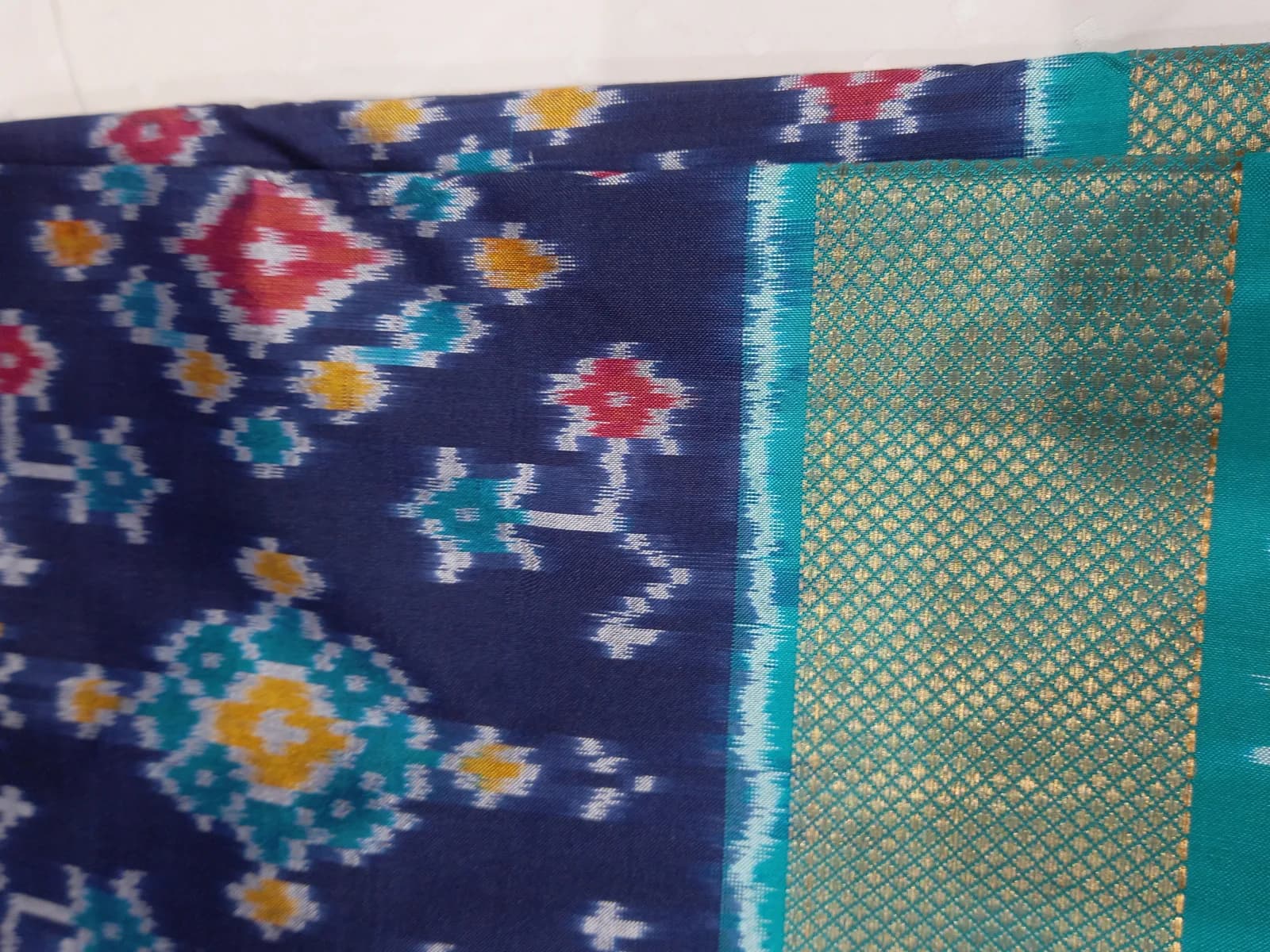
The word ikat comes from the Malay and Indonesian 'mengikat', to tie or bind, and names a resist-dyeing method where bundles of yarn are tied off before dyeing so the pattern is already in the thread before weaving begins. Pochampally in Telangana is India's best known ikat hub and is particularly associated with double ikat, where both warp and weft are pre-dyed.
Region: Bhoodan Pochampally, Telangana, part of a wider Indian ikat tradition that also includes Sambalpuri ikat in Odisha and the double ikat Patola of Gujarat
GI status: GI tagged as Pochampally Ikat.
Best season: Cotton ikat: spring, summer and monsoon. Silk ikat: winter and cooler evenings
The geometric ikat pattern reads best in a simple Nivi drape without excess pleating that would hide the motif; a plain contrast blouse lets the pattern stay the focus.
Buying a ikat (pochampally) and something here does not match what you have in hand? Ask us on WhatsApp before you decide; we would rather answer than have you guess.