HISTORICALLY LINKED TO MUGHAL-ERA BANARAS AND UPPADA WEAVING
A silk fabric woven with a zari weft running through the entire ground, not just the border, so the whole saree catches light rather than only its edges.
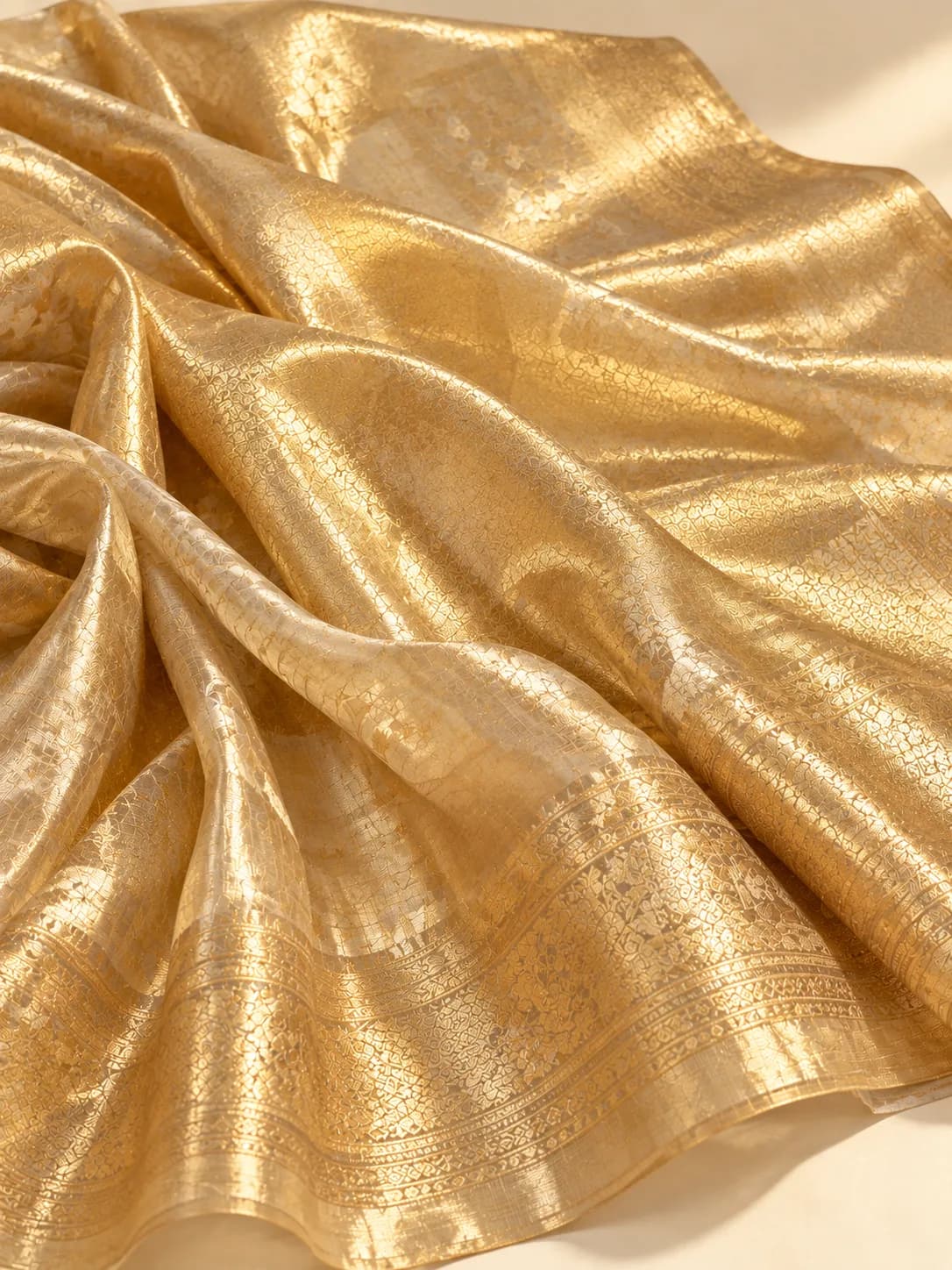
Tissue is named for its gossamer, almost see-through appearance, which becomes more pronounced in direct light. Its zari brocade roots trace to the Mughal period, when artisans in Banaras and later Uppada began working fine silk against a zari weft that runs across the whole ground rather than sitting only at the border, which is what makes tissue silk read as metallic cloth rather than silk with a metallic trim.
Region: Historically linked to Mughal-era Banaras and Uppada weaving; woven across several silk hubs today
Best season: Best for evening or indoor, air-conditioned occasions given the metallic ground's warmth
Tissue's light weight and slight stiffness suit a classic Nivi drape. Because the whole ground already shimmers, a plain, unembellished blouse usually looks better than a heavily worked one.
Buying a tissue and something here does not match what you have in hand? Ask us on WhatsApp before you decide; we would rather answer than have you guess.